Image Map
Showing posts with label Listening. Show all posts

Wednesday, March 19, 2014

Carnival of the Animals Listening Unit in 1st Grade Music

When I student taught, my wonderful co-op introduced me to the world of Carnival of the Animals.  She taught the piece in such a lively, exciting way, and the kids ate it up.  They listened and described music.  They moved to music.  They impressed me.

It was during this time that I was introduced to the book by Barrie C. Turner and Sue Williams called Carnival of the Animals: Classical Music for kids.  This gem of a book first briefly introduces the composer and the instruments of the orchestra.  I teach this page on the first day of the unit.  We practice pronouncing Camille Saint Saen's name with our best French accents and we talk about the jobs of the performers.


In each proceeding class, I introduce one animal.  I go from beginning to end of the piece when introducing animals over time.  To intro the animal, I read the short paragraph the book presents, describing the animal and the music that is used to represent it.  I then instruct the students to prove to me that they are excellent listeners, while watching me move to the animal they are learning.  They see me crawl on the floor like a lion the first day, and I've got them hook, line, and sinker.  I then give them a chance to move silently like the animal we are learning.  Each movement I use clearly aligns and matches the music, to help students remember and correlate their learning. 

After we've learned a few animals over several class periods, I do some review, playing short clips of one of the animals, having the students show me without talking which animal it is.

I assess this learning several times throughout the unit.  I give a mid point assessment, where I mix up the animals we know, and the students write the number (1 for the first listening example) beside the picture of the animal and it's instruments.  I give a final assessment, where only some animals are pictured.  I have students color the animal they hear with a specified crayon color.  I just created paper puppets to use as informal identification manipulatives as well.  All of these assessments are now available in my teacher's pay teachers store


Through this kinesthetic unit, I am always amazed at how well students are able to listen and describe music.  Their parents often comment on how much they love this piece of music. 


Hope this sparks some ideas for getting your kids moving and listening jointly. 

Tuesday, August 6, 2013

Brain Dance Chopstick Activity

I learned a wonderful brain dance, teamwork activity from our Brain Dance artist-in-residence, Kerri Lynn Nichols.  This is a good beginning of the year movement exploration activity. 


·      Partner students up.  Each set of students receives one plastic chopstick.  I purchased mine on Amazon.com
·      It is the task of the students to keep the chopstick held between the two students’ palms, with one end resting on each student’s hands.  Nothing else touches the chopstick.
·      When the music begins, students must move to the music as a team, while keeping the chopstick upheld between their hands.  To be successful, without dropping it, they will need to move slowly.  Thus, I often partner this with slow music from David Chappelle's Music for Creative Dance.
·      This task is more difficult for students then the simple directions state.  It is good for engaging the brain and developing teamwork.
·      Advanced Option – One student closes their eyes while the other student moves just their hands around while still maintaining the chopstick between them.  The student with their eyes open then moves their partner around ‘general space’ being careful not to run them into anything in the room. 

Saturday, March 16, 2013

Form Circles: Free for a Limited Time

This week, I am offering my new Form Circle Cards for FREE!  Download them from my teachers pay teachers store for free for a limited time. 


These cards can be cut out and laminated.  I attached sticky magnets to the back of them.  Then, I use them on the board, for whole class form identification of songs we are singing, dancing to, performing, or listening to.


Included also, are small form circle cards.  I print these and put them in small plastic baggies for use in individual or small group form identification.  They are great for informal and formal assessment.  Students are great at identifying the form, when given guidance and opportunities to practice.

Enjoy!

Thursday, February 21, 2013

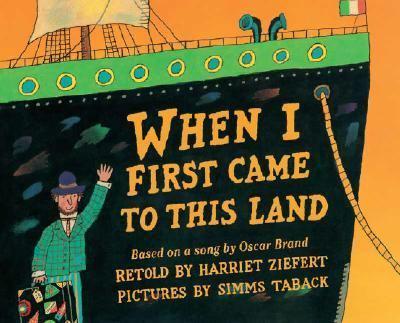
When I First Came To This Land

A picture book that I just love is: When I First Came to This Land, by Harriet Ziefert and Simms Taback. 
I use this book with my 5th graders to encourage writing in the music room.  We learn the song, via the book, and practicing singing it, taking note of the rhyme scheme used.  We also listen to several recordings of the song and compare and contrast the versions.  Lastly, we use the book as a mentor text to model writing our own verses.  I use the worksheet below:
This worksheet is simple, but is a free download at my TpT store, if it is a time saver for you.
We share our verses, and compile a list of our favorites to create an "add-on" version of the song.  The kids enjoy coming up with whacky verses that work with the rhyme scheme.  They usually perform this song with great energy and vocal clarity.


This wonderful picture book is also great to use as a listening closer with primary students.  Sing the song or share a recording of the song with the students along with the picture book, and have them listen to quality singing as a calming closer to your lesson.

Monday, February 11, 2013

Music Library

In thinking of ways to increase the musical impact I have on my students outside of the classroom,  I collaborated with my librarian to create a "music library."  Through grant funding and some PTO support, we have been able to order a series of CD's, cases, and storage equipment.  Students are able to borrow the cd's, listen to them at home, and return them the next cycle.  Teachers can also use the cd's as resources to incorporate music across the curriculum in their classes.  It has been a huge success.  The next challenge will be to figure out how to do this once cd's become obsolete!

When undertaking this endeavor, we started with the spinner of cd's.  Eventually, the spinner was too full, so we purchased a storage rack.  
Music is classified by genre on the cd cases and on the rack.


Dots on the spine of the durable cases we purchased alert students (and those who shelve the cd's) to the genre classification of the music.

As cases break, we replace them.  Every few years, we add to the mix of repertoire for our students.  I try to select a wide variety of quality music that represents a broad range of categories, relates to the Common Core or National Standards, and is interesting to students.

We make sure to include albums from all of the Artists-in-Residence who have visited our school, as well.